Pullboard coordinates development agents around approved specifications: each claims an item in its own worktree, passes a test gate, then another agent verifies the commit before it is accepted. Rules and activity stay in the repository, with a local board instead of a hosted service.
Its workflow puts concrete controls around agent work: approved requirements are frozen when an item is claimed, lanes restrict writable paths, and a state machine shared by the commands, interface, and documentation governs each transition.
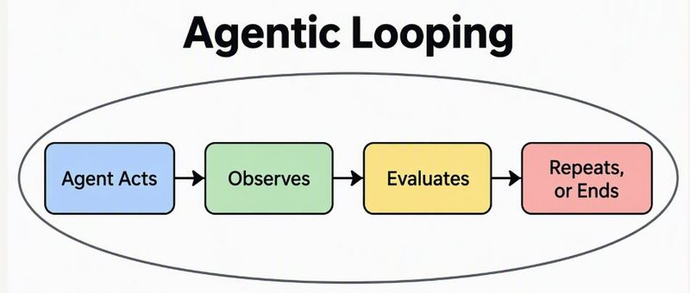
Agent loops combine action, observation, and evaluation to refine an answer or retry an operation until it meets a criterion. Jesse Liberty demonstrates the pattern in C# with Microsoft Agent Framework: a loop agent, an evaluator, and an iteration limit.
The example contrasts a deterministic marker such as DONE with a model-based judge, then outlines safeguards to add: timeouts, idempotent calls, logging, and cost tracking. Each iteration adds latency and token usage.
oh-my-hermes adds an orchestration layer to Hermes Agent: it maps work categories to models and reasoning effort, loads skills on demand, and can turn a goal into a graph of parallel tasks. Each task keeps a separate write scope, while a distinct node verifies the outcome.
A notable architectural choice is separating preparation from execution evidence: a plan is not treated as completed work, and an agent’s claim that it finished does not validate the result. The project also offers review-gated memory and a dedicated TUI, without replacing or patching Hermes Agent.
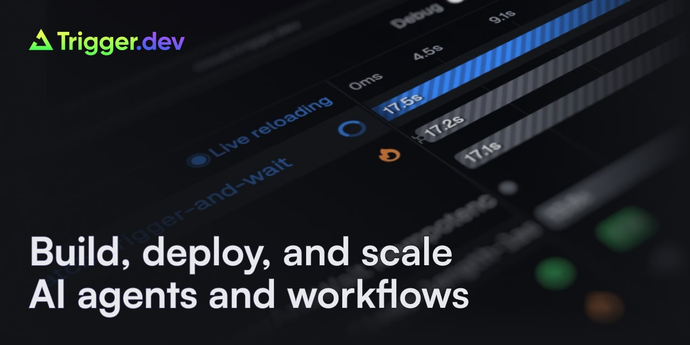
Trigger.dev runs long-lived tasks and agents with retries and concurrency controls. Its TypeScript SDK keeps those workflows close to application code.
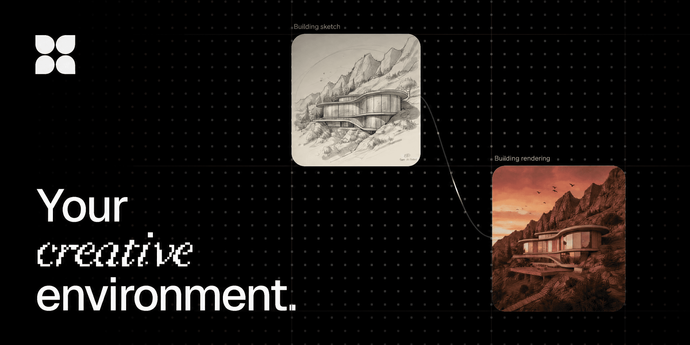
Flora brings text, image and video models into a shared creative workspace. Its canvas supports exploring alternatives and turning an idea into a repeatable workflow.
Inngest breaks backend functions into steps with retries, pauses and resumability. Its image-import example illustrates coordinating operations without implementing the entire orchestration layer yourself.