Sébastien Rigaux

Tech watch

← All links

Testing

Verifying software behavior through reproducible scenarios and checks.

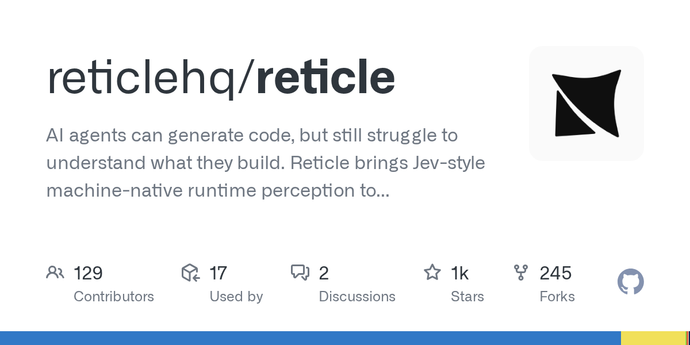
GitHub preview card for the reticlehq/reticle repository, showing its name, a description of runtime perception for AI agents, a black icon, and counts for contributors, users, discussions, stars, and forks.

Reticle helps coding agents check what they actually built rather than stopping at the code change. The repository presents a runtime-perception tool for web and desktop apps; reticle compare drives two builds in a browser and reports differences users can see, network calls, and console errors.

Verification happens from outside the app, with no SDK required. The comparator can pit a main build against a pull request preview and, with --base, classify differences as regressions, missed targets, or changes.

Divyanshu Shekhar

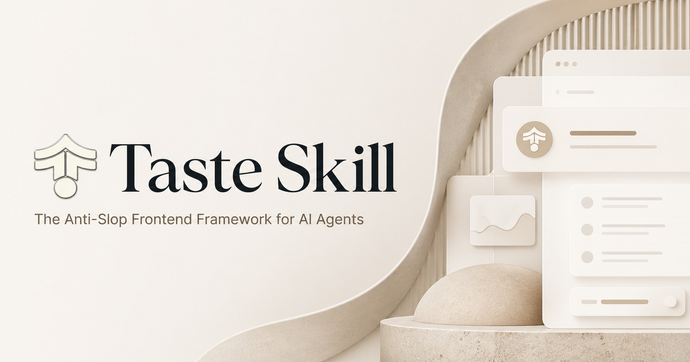
Taste Skill banner on a beige background, with the project name on the left and stacked interface mockups on the right.

Taste Skill gives coding agents a system for building less generic company websites: palettes, hero layouts, UI fragments and real photographs, with art direction tailored to the type of business. The repository offers Claude Code and Codex integrations, plus installation through npx skills.

Its distinctive feature is automated checking in headless Chrome: pages render at four widths, from 390 to 1440 px, and are checked for empty visuals, contrast, alignment and images missing on slow networks. WebGL and scroll effects are limited to tech, gaming and software pages, with static fallbacks for phones and reduced motion.

Leonxlnx

Illustrated map of mountains, valleys, and dotted paths connecting different points.

TanStack DB reaches 1.0 RC1 after extensive stabilization work. Kyle Mathews explains how test oracles—independent models that calculate expected behavior—and property-based testing uncovered bugs in collection updates and the change messages sent to subscribers.

These executable references also give coding agents precise rules to preserve when changing the implementation. The trade-off is clear: writing and refining models takes work, but their simplicity makes complex algorithms easier to verify. The RC also supports incremental adoption, from existing REST APIs to local persistence, offline mutations, and real-time sync.

Kyle MathewsFound via This week in React

TanStack AI 1.0 graphic with TanStack logos, the text “AI building blocks for TypeScript,” and a palm tree against a gradient background.

TanStack AI 1.0 stabilizes its core APIs for combining chat, tools, media, and integrations across multiple providers and UI frameworks. Tree-shakable adapters and end-to-end tests using deterministic fixtures check the flows without live model calls.

The agent harness adds durable sessions, interrupts, and background work, but remains 0.x and may change in minor releases. Upgrading requires moving the stable packages together and supplying a threadId explicitly; passing the type check does not migrate persisted conversations or files.

co-authored by Alem Tuzlak, Jack Herrington, Tom Beckenham, and Tanner LinsleyFound via This week in React

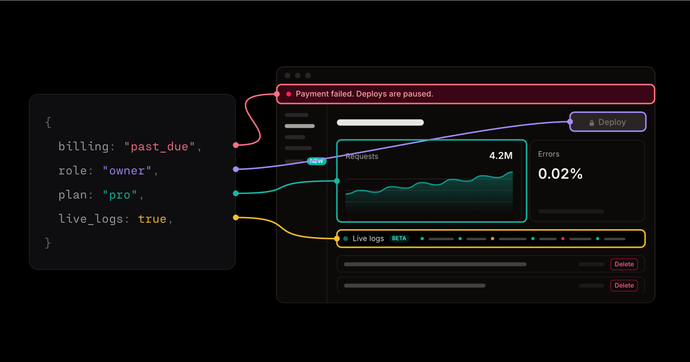
Diagram connecting application state values—billing, role, plan, and live logs—to elements in a dashboard.

When an agent changes a UI, checking a single account cannot cover every role, plan, or feature flag. Matt Rothenberg shows how values scattered across hooks, providers, and layouts can hide overlooked states — such as a Delete button shown to a view-only user.

Making display state an explicit component input lets teams render relevant combinations directly, test them, or compare them in a visual grid. Storybook and Playwright complement this approach, but they do not choose which scenarios to cover; that decision still matters.

Matt Rothenberg

A black-and-white crowd behind the pour logo and the slogan “Make the web work for everyone”.

Pour brings together a browser extension, a CLI, a VS Code extension and a contrast checker to assess accessibility against WCAG 2.2. Audits identify affected elements and explain fixes; criteria that require human judgment are marked for review.

The CLI can fail a CI step when it finds issues, generate an HTML report for a site, and expose tools to an agent through MCP. Automated checks assist with 51 of the 86 WCAG 2.2 criteria without claiming to determine compliance: a checklist accompanies the findings to support manual review.

Found via Frontend Focus

GitHub preview of the pgrundev/pgx repository, described as lightweight PostgreSQL for AI agents, written in Rust.

PGX runs isolated PostgreSQL databases inside a single Rust runtime, targeting short-lived agent, CI, and test environments. On-demand creation from a sealed template and copy-on-write on ZFS reduce the cost of branching; without block cloning, the system makes a full copy.

The project is at v0.1.0 and targets disposable databases, not production data: fsync is disabled, and one runtime is a single failure domain. Its benchmarks document their measurements and conditions; the PostgreSQL regression suite reports zero result differences in the stated configuration, without claiming general compatibility.

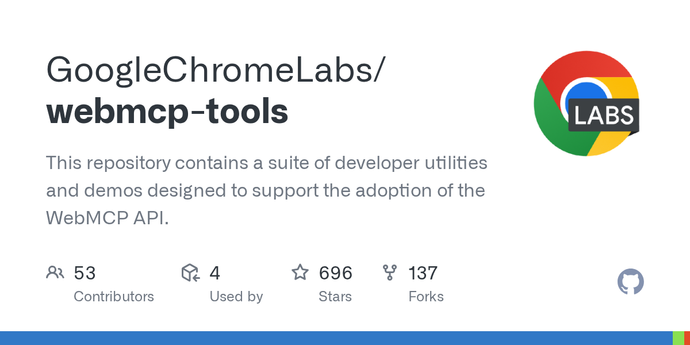
GitHub preview for the GoogleChromeLabs/webmcp-tools repository, showing its name, a description of WebMCP utilities and demos, and the Chrome Labs logo.

This repository brings together tools for working with the WebMCP API: a Chrome extension inspects the tools exposed by a page, their input schemas, and connection issues, while a CLI evaluates whether LLMs call the right tools against defined test cases.

Demos also show declarative and imperative integrations in practical interfaces. The collection helps move from experimentation toward more structured testing, while remaining a project intended to support adoption of the WebMCP API.

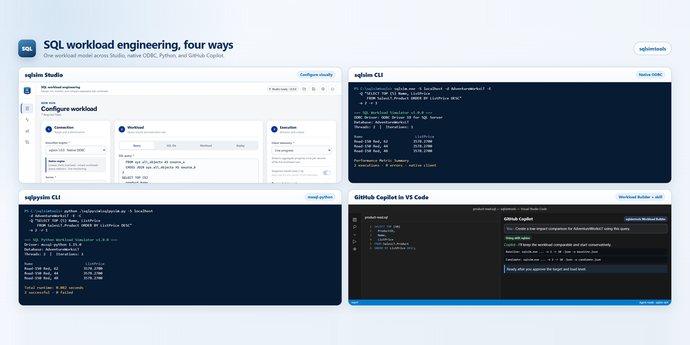
Visual overview of sqlsimtools with Studio, CLI, Python, and AI agent

sqlsimtools provides an open-source toolkit to test, replay, and compare SQL Server workloads without any hosted service or external telemetry. It offers four modes: a local Studio UI, a native CLI, a Python workflow, and an AI agent-driven experiment builder. The same suite applies to SQL Server 2019–2025, Azure SQL, and Microsoft Fabric, on Windows or Ubuntu, with local installation and direct execution against your chosen target.

Microsoft