Sébastien Rigaux

Tech watch

← All links

Self-hosting

Deploying and operating services on infrastructure under your control.

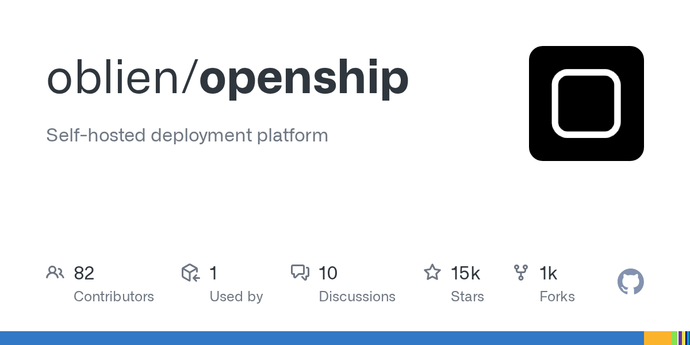
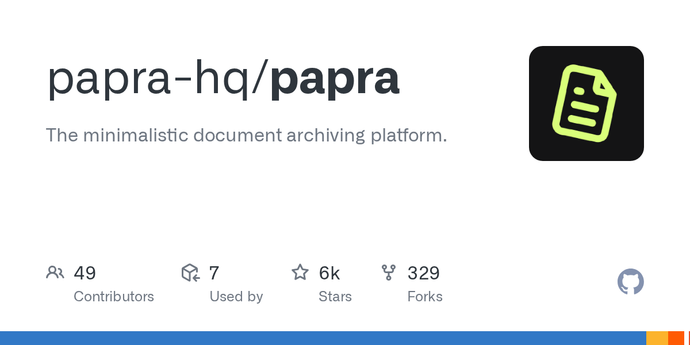
Papra GitHub banner showing the repository name, a light-green document icon on a black background, and contributor, usage, star, and fork counts.

Papra brings document storage and management together in an open-source archiving platform. Full-text search, advanced filters, tags, and automatic imports from email or a folder help organize files and retrieve them later.

The project can be deployed with Docker and also provides a CLI, API, SDKs, and webhooks for integration with other tools. Its online demo runs entirely in browser-local storage, with no backend.

Corentin Thomasset

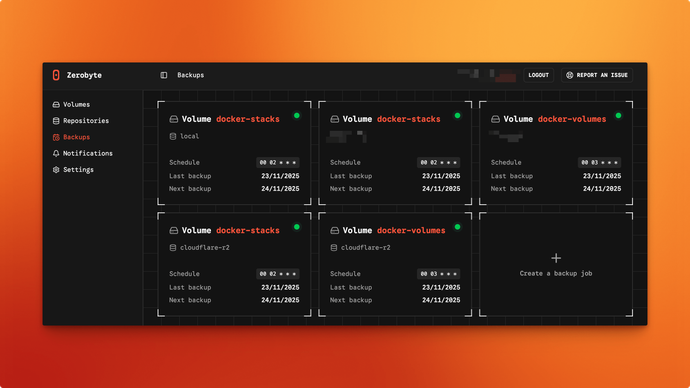
Screenshot of the Zerobyte interface showing scheduled backup jobs, their status, and destination repositories.

Zerobyte brings scheduling, management, and monitoring of encrypted Restic backups into a web interface. It supports NFS, SMB, WebDAV, and SFTP sources as well as local directories, with destinations including S3, GCS, Azure, and rclone.

The Docker Compose setup can be pared down when backing up only already-mounted directories: removing SYS_ADMIN and the FUSE device reduces the container’s granted capabilities, but prevents direct mounting of remote shares.

nicotsx

GitHub banner for CVEngine showing its name, a short description, contributor, issue, star, and fork counts, plus a small image of a person holding out their hands.

CVEngine brings continuous asset discovery, vulnerability scanning, and matching against exploited CVEs into a self-hosted platform. It aims to prioritize flaws that actually apply, using read-only validation and evidence rather than presenting only a list of alerts.

Version 1.3 adds Sentinels to run scans from private networks, along with an OpenVAS integration that is disabled by default. Results feed the same inventory and severity ratings; the tool also provides a REST API and MCP integration.

hevnsnt

Snow-covered mountains beneath a purple overlay, with the text “Free Your Marketing! empowered by mautic.”

Mautic is an open-source marketing automation platform that brings together campaigns, email, landing pages, and contact management. It can be self-hosted on an organization’s infrastructure, with a REST API and plugins for integration and extension.

The page also highlights drag-and-drop campaign creation, lead scoring, and privacy-focused features. Cited use cases include sending more than a million personalized, multilingual emails daily for an e-commerce business.

BillionMail GitHub banner showing the project name, a description of a self-hosted mail and email marketing service, and contributor, issue, star, and fork counts.

BillionMail combines a mail server, newsletters, and email marketing in an open-source, self-hosted package. Its repository outlines a setup flow connecting a domain and DNS verification to campaign creation and sending, with list and tag management.

The project supports Docker and installation through aaPanel. It also integrates RoundCube for webmail, offers delivery analytics, and is licensed under AGPLv3; the team running it remains responsible for hosting the service.

OpnForm logo on a light background, with the tagline “The open-source form builder”.

OpnForm is an open-source form builder available as both a managed cloud service and a self-hosted application. Its repository documents practical operational details: bundle-size limits, PostgreSQL index migrations that keep writes available, isolated Docker environments for worktrees, and dependency security checks. It also provides an MCP server that lets AI agents create and preview drafts, with versioned previews that support restoring earlier revisions.

OpnForm

WebCheck banner with the project name in green, the text “On-demand OSINT tool for exploring website data,” and a globe icon protected by a shield.

WebCheck brings publicly exposed domain information into one interface: DNS, TLS certificates, HTTP headers, subdomains, detected technologies, and potential threat-list matches. It offers 44 checks and can also examine redirects, trackers, and email configuration.

The results provide a useful starting point for surface-level checks, not a substitute for a thorough audit: some data, such as vulnerabilities linked by Shodan, depends on external sources. The project is open source, can be self-hosted, and provides an API.

Alicia Sykes

Promotional illustration for the makeplane/plane GitHub repository.

Plane brings work-item tracking, cycles, modules, pages, and analytics together in an open-source project management platform, with self-hosting options through Docker or Kubernetes. Its repository also documents a substantial architecture effort: migrating the interface to the Propel design system in stages, with tests, accessibility checks, and the gradual removal of legacy components. The web app uses React and React Router, with Django on the API side.

Plane

NocoDB logo above the text “Build Databases As Spreadsheets, No-Coding Required” on a grid-patterned background.

NocoDB provides a spreadsheet-style interface for managing tables, views, and access controls without writing code. It combines grid, gallery, form, Kanban, and calendar views with REST APIs and an SDK for programmatic access.

Deployment options range from Docker with SQLite or PostgreSQL to an automated setup with PostgreSQL, Redis, Traefik, and SSL renewal. For production evaluation, note that the repository lists a Sustainable Use License, while its standalone binaries are intended for local testing.

prompts.chat banner showing its logo, collaborative AI prompt library, and MCP Server and Self-Hostable labels.

prompts.chat brings together community prompts for ChatGPT, Claude, Gemini, and other assistants, alongside an interactive book on prompt engineering. The repository also provides a CLI, a Claude Code plugin, and an MCP server for using prompts across different tools.

For a team, self-hosting provides a private prompt library with custom branding and authentication configured by the setup wizard. The integration examples range from npx prompts.chat to a remote MCP connection, without requiring a single access method.

c15t changelog graphic showing the c15t logo and version number 3.0.0 on a black background.

c15t 3 rebuilds consent management around a shared engine with adapters for Next.js, React, Vue, Nuxt, Astro, Svelte, TanStack Start, and plain HTML sites. Banners can be rendered into server HTML, while a consent manifest avoids waiting on the backend for every request. The reported gains depend on the deployment mode and come from benchmarks published by the project.

The migration preserves choices stored by v2, but changes APIs, packages, and the backend. Codemods handle part of the upgrade; clients and backend must move to v3 together. The release also introduces more strictly validated policy rules and a rewritten self-hosted backend supporting PostgreSQL, MySQL, and SQLite.

Inth