
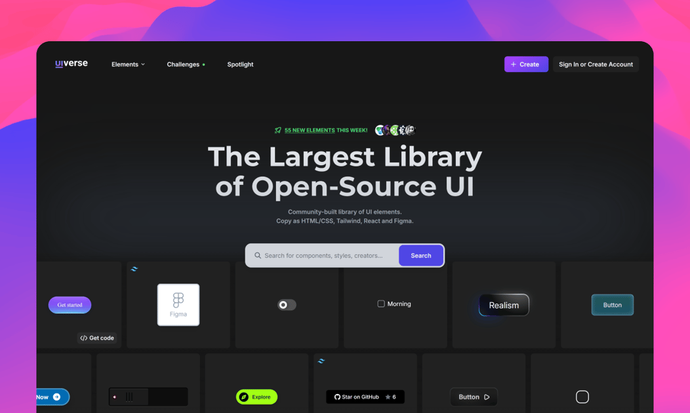
Uiverse collects community-built interface elements with HTML/CSS, Tailwind or React code. It offers examples for studying visual treatments and adapting components to a project.
Tech watch
← All linksPage 4 of 4
Uiverse collects community-built interface elements with HTML/CSS, Tailwind or React code. It offers examples for studying visual treatments and adapting components to a project.
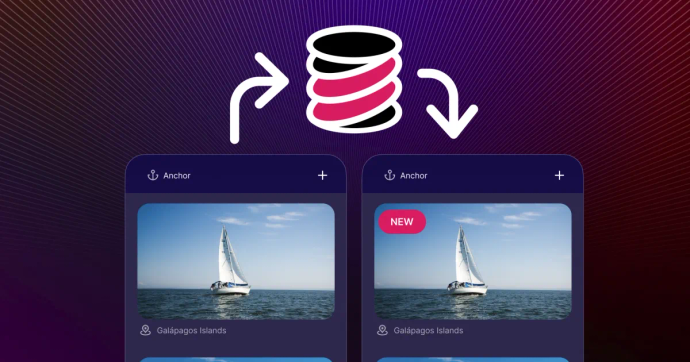
This guide introduces TinyBase into an Expo application to combine reactive local data with synchronization. It covers sharing data across devices and users.
This guide explains the Docmost monorepo, with its React frontend and NestJS backend. It covers dependencies and setup steps for contributing to or adapting the application locally.
The article combines Comlink and TanStack Query to manage calculations in a Web Worker. Its example shows how to keep the interface responsive during expensive computation.
https://johnnyreilly.com/about
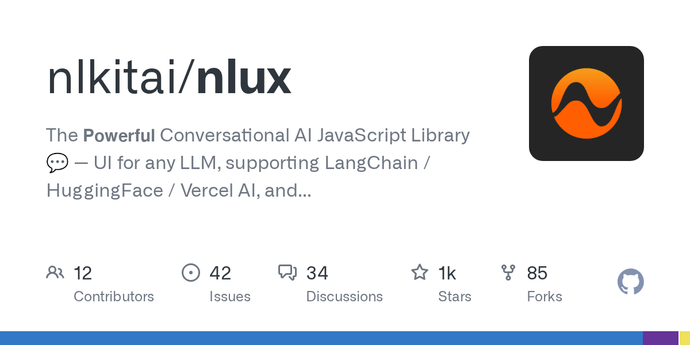
NLUX provides conversational UI components for connecting web applications to LLMs. It supports React, Next.js and plain JavaScript, with a CLI for bootstrapping a project.
Plasmic provides a visual builder that integrates with a React codebase. Existing components can be reused in pages and applications assembled through drag-and-drop editing.
The documentation explains where data fetching, secrets and interactions belong in the App Router. Examples show how to pass server-fetched data into interactive Client Components.
TW Classed defines reusable components with typed variants and extensible styles. Compound variants reduce repeated class combinations across application views.

The site presents React Day Berlin and its talks and workshops for the React ecosystem. The current program emphasizes AI integration, architecture and maintainability.
Tutim provides headless infrastructure for forms with multiple steps, validation and conditional branches. Teams can integrate the flow with their own components and design system.


