Sébastien Rigaux

Tech watch

← All links

Open Source

Software with open source code, including licensing and contribution practices.

White Decap logo on a purple-to-pink gradient background.

Decap CMS adds an editorial interface to static sites while keeping content in the Git repository. Teams can manage drafts, reviews, and publishing with version history and a live preview that supports non-technical contributors.

Its declarative setup lives in a config.yml file for defining collections, fields, and workflows, while custom widgets extend the editor. For teams needing centralized access or relief from Git API limits, Decap Turbo adds features including hosted authentication and a database proxy.


Snow-covered mountains beneath a purple overlay, with the text “Free Your Marketing! empowered by mautic.”

Mautic is an open-source marketing automation platform that brings together campaigns, email, landing pages, and contact management. It can be self-hosted on an organization’s infrastructure, with a REST API and plugins for integration and extension.

The page also highlights drag-and-drop campaign creation, lead scoring, and privacy-focused features. Cited use cases include sending more than a million personalized, multilingual emails daily for an e-commerce business.

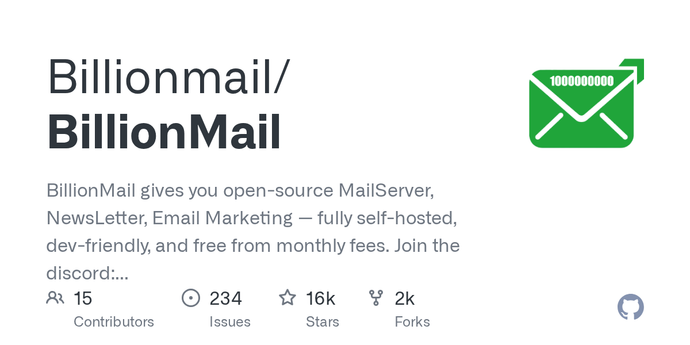
BillionMail GitHub banner showing the project name, a description of a self-hosted mail and email marketing service, and contributor, issue, star, and fork counts.

BillionMail combines a mail server, newsletters, and email marketing in an open-source, self-hosted package. Its repository outlines a setup flow connecting a domain and DNS verification to campaign creation and sending, with list and tag management.

The project supports Docker and installation through aaPanel. It also integrates RoundCube for webmail, offers delivery analytics, and is licensed under AGPLv3; the team running it remains responsible for hosting the service.

OpnForm logo on a light background, with the tagline “The open-source form builder”.

OpnForm is an open-source form builder available as both a managed cloud service and a self-hosted application. Its repository documents practical operational details: bundle-size limits, PostgreSQL index migrations that keep writes available, isolated Docker environments for worktrees, and dependency security checks. It also provides an MCP server that lets AI agents create and preview drafts, with versioned previews that support restoring earlier revisions.

OpnForm

WebCheck banner with the project name in green, the text “On-demand OSINT tool for exploring website data,” and a globe icon protected by a shield.

WebCheck brings publicly exposed domain information into one interface: DNS, TLS certificates, HTTP headers, subdomains, detected technologies, and potential threat-list matches. It offers 44 checks and can also examine redirects, trackers, and email configuration.

The results provide a useful starting point for surface-level checks, not a substitute for a thorough audit: some data, such as vulnerabilities linked by Shodan, depends on external sources. The project is open source, can be self-hosted, and provides an API.

Alicia Sykes

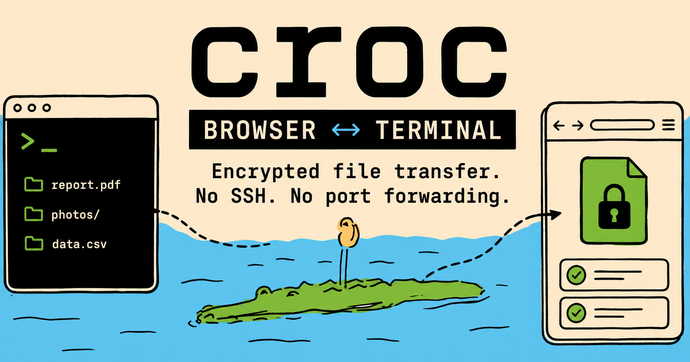
croc encrypted file transfer between browser and terminal

croc enables sending files or text between two devices with end-to-end encryption, no network setup, and no user account. The tool works via CLI or a web interface, generates a shareable code, and supports multi-file, folder, and resumable transfers. It stands out for its ease of use, cross-platform support, and a user experience often considered more polished than Magic Wormhole.

Zackary Scholl

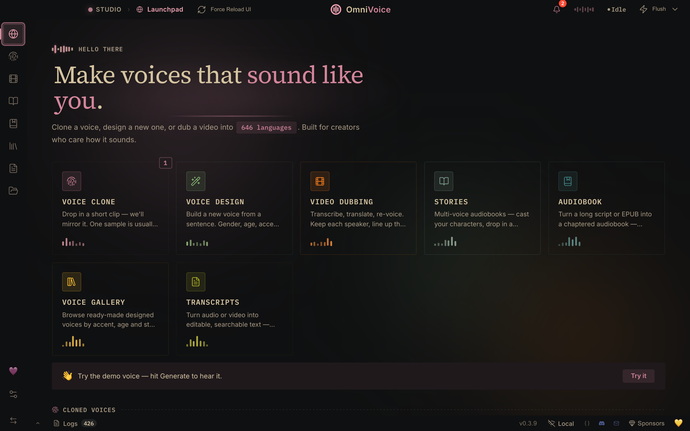
An open-source local suite for voice workflows

VoiceStudio is an open-source voice suite designed for local use, covering voice cloning and design, video dubbing, dictation, transcription, and audiobook creation. The repository advertises support for 646 languages, making it relevant to teams exploring audio workflows without relying solely on a hosted service.

debpalash

Documentation

Explore the Microsoft Quantum Development Kit

learn.microsoft.comPermalink
Explore the Microsoft Quantum Development Kit

This Microsoft Learn page introduces the Quantum Development Kit and links to guides for quantum programming, simulation, and debugging. The open-source kit can connect to Azure Quantum to run programs in the cloud.

azure-quantum-content