
React Grab lets you select a visible element in an app and pass its context to a coding agent. It helps locate the corresponding component in the codebase.
Tech watch
← All linksPage 2 of 3
React Grab lets you select a visible element in an app and pass its context to a coding agent. It helps locate the corresponding component in the codebase.
Bruno stores request collections in local text files. Git branches, diffs and reviews can then apply to API tests and examples alongside the rest of a project.
Tunnelto creates a tunnel to a development port and provides a public address. The repository covers installation, CLI options and self-hosting.
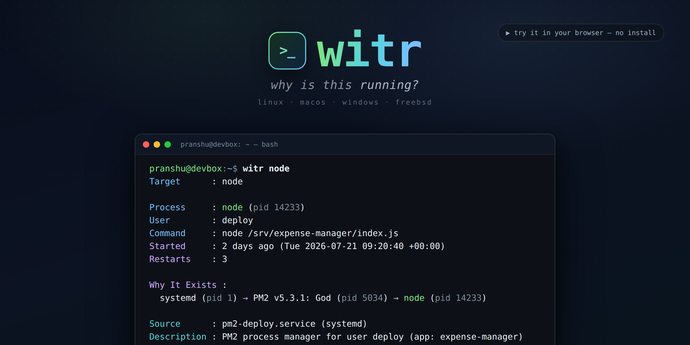
Witr traces the startup chain behind a process, container or port. Its CLI and terminal interface help explain why a service is running before changing it.

Infisical organizes application secrets and configuration across environments. Versioning and rotation are among the mechanisms provided for managing their lifecycle.
GameShell turns a real shell session into a sequence of checked exercises. Missions teach commands through practice, with French and English among the available languages.
This TypeScript plugin adds inline hints and hover information for directives. It also tracks relevant imports to make module boundaries easier to understand.
This GTK4 application organizes SSH hosts with search and field validation. Raw text and diff views help inspect changes before saving configuration.
Fumadocs provides a documentation-site foundation for React frameworks and Astro. The repository identifies supported environments and its ESM-only package model.

The article explains why identical inputs should produce identical binaries and how to configure Source Link. It uses NuGet Package Explorer to validate the resulting packages.
https://mitchelsellers.com/about

This guide explains installing and running Dev Proxy from the command line. The tool simulates cloud API behaviors and failures to test application resilience.
garrytrinder
Mailpit provides an SMTP server, a mail-viewing interface and an API for automated tests. Its Docker image lets developers inspect messages without sending them to real recipients.
The repository introduces the Codex CLI coding agent and installation procedures. It provides an entry point to a code-assistance workflow running locally on the machine.
This server exposes the Node.js debugger to assistants such as Cursor and Claude Code. It adds runtime information to the context available for diagnosing problems.

Omlet shows component usage and supplied prop values inside VS Code. These insights help teams understand actual library adoption before changing components.

This extension combines discovery, installation and management of MCP servers and skills. It makes those resources available to coding agents used alongside the editor.
This VS Code extension experiments with model-assisted debugging using actual program execution. Breakpoints, stepping and observed values provide context for locating a bug.
DevPod uses devcontainer.json to create environments on local Docker, remote machines or Kubernetes. The same environment definition can follow a project across infrastructure choices.
A click shortcut on a component opens its source file in the editor. A context menu also exposes parent components and props to help locate the relevant code.
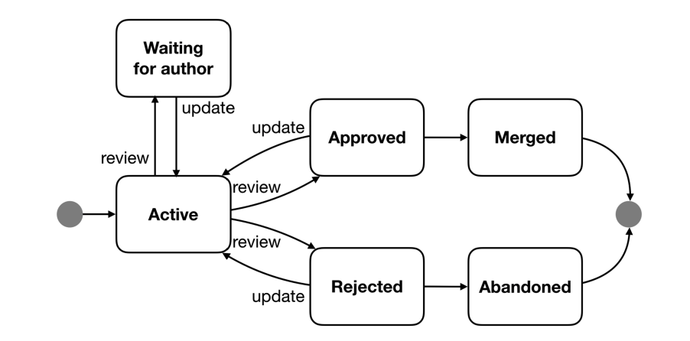
This article discusses a study of overdue pull requests and the Nudge reminder system. It examines how targeted prompts to authors and reviewers can reduce workflow bottlenecks.


