Sébastien Rigaux

Tech watch

← All links

Developer Experience

Tools and practices that make development clearer, faster and more reliable.

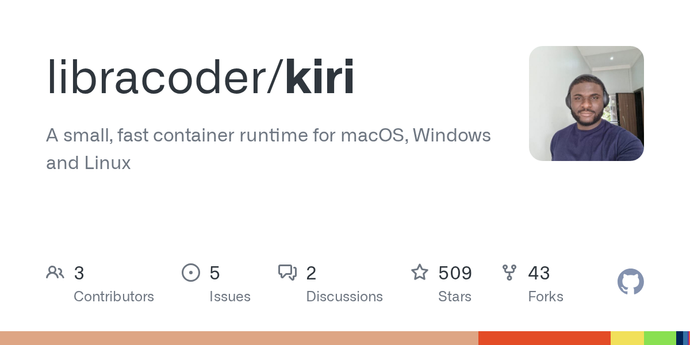
GitHub banner for the libracoder/kiri repository, showing its name, a short description of the container runtime, a man's portrait, and counts for contributors, issues, discussions, stars, and forks.

Kiri replaces Docker Desktop and OrbStack with a lightweight container runtime for macOS, Windows, and Linux, compatible with the Docker CLI, Compose, and buildx. The repository also describes a native UI and support for Kubernetes clusters and Linux machines.

Its architecture uses a Linux VM and a Rust agent that starts containers through clone3, without runc, a shim, or dockerd. The project publishes startup-time benchmarks against Docker Desktop and OrbStack, along with instructions for reproducing them.

Precious Okwu

Metalama automates cross-cutting C# patterns with aspects that generate code at compile time, while checking architecture rules as you edit. The repetitive implementation stays out of business code and the repository, and one aspect can be applied to a method or to a set of methods selected in code.

For example, an aspect can wrap a method in try/catch to log its entry, result, and exceptions. Metalama also lets you preview and debug the transformed code, making those changes inspectable.

Found via C# Digest

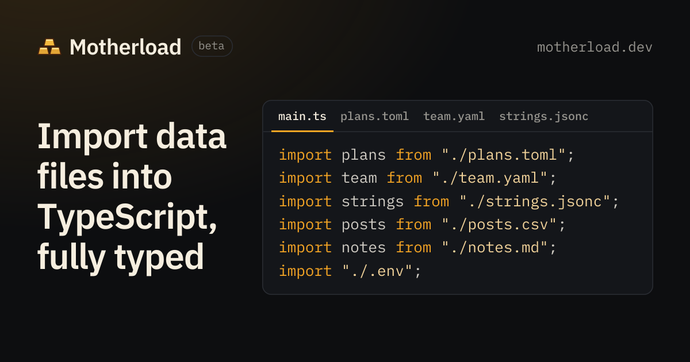
Motherload graphic with the text “Import data files into TypeScript, fully typed” on the left and TypeScript code importing plans.toml, team.yaml, strings.jsonc, posts.csv, notes.md and .env on the right.

Motherload lets you import data files as TypeScript modules typed from their contents. It supports TOML, YAML, JSONC, JSON5, CSV, TSV, Markdown, plain text and .env files; types appear in the editor, and tsc reports parsing errors with their locations.

Type-checking uses TypeScript 7.1 content mappers, currently in beta, and requires --runExternalCode. At runtime, a preload or plugin adapts the same imports for Node.js and a range of bundlers.

Colin McDonnellFound via This week in React

All UtilityCSS graphic showing the site name and its catalog of Tailwind CSS templates, components, and tools.

All UtilityCSS brings together free and paid Tailwind CSS resources, organized by type, use case, and technology. Its listings include copy-paste components, templates, Next.js starters, and color-management tools, several of which support Tailwind CSS v4’s OKLCH formats.

Filters help narrow the catalog to building blocks for a project, but the directory alone does not guarantee their quality or accessibility. The page advises checking those details with each resource.

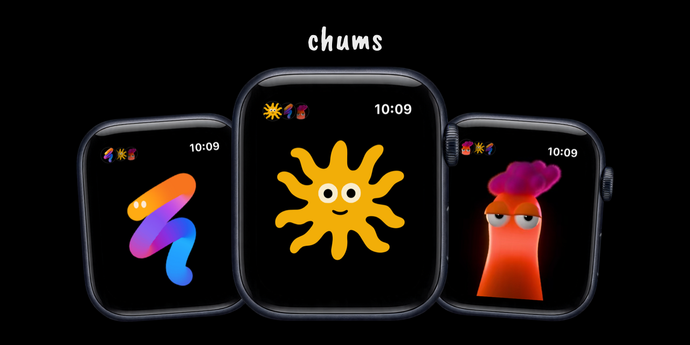
Three Apple Watches, each showing a colorful Chums character against a black background.

Chums connects an Apple Watch and iPhone to Claude Code or Codex agents running on a Mac. Its interface makes agent activity visible, shows tool calls, and lets users respond to permission requests or dictate instructions.

The Node.js hub stays on the Mac, but the watch API is exposed through Tailscale Funnel and protected by a token. The project is open source and requires no Chums account, though setup involves building the apps with Xcode and configuring several dependencies—a trade-off between local control and a more demanding installation.

Lucas Couto

The number 7.4 in a purple gradient on a dark background.

Astro 7.4 introduces astro build --timings, breaking down time spent rendering pages, running Vite plugins, processing Markdown, and transforming images. The release example shows how the report exposed sequential network requests and helped cut generation time for blog pages.

The release also separates image services for build and runtime, and adds notFound() for manually composed entrypoints. Parallel prerendering and custom redirect pages remain experimental; the former can increase memory use. One upgrade requirement to check: Astro now requires Node.js 22.22.0 or later.

Matthew Phillips

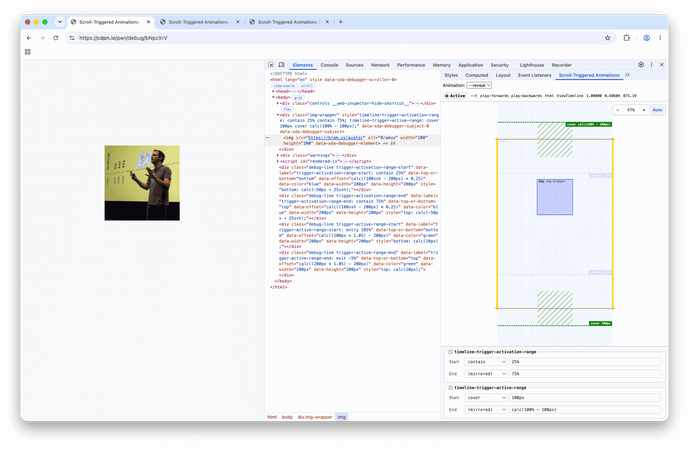
Screenshot of Chrome DevTools showing the extension panel, its minimap, activation and active ranges, and their editing fields.

This Chrome DevTools extension makes CSS animations triggered by scrolling easier to debug: a minimap locates the scroller, element, and subject, while colored markers show activation and active ranges. Values can be edited live; the tool supports ScrollTimeline, ViewTimeline, and elements using position: sticky.

Two limitations come from Chrome: relative units such as 90vh are reduced to computed pixel values, and elements inside an iframe are not supported. The extension fills a gap in DevTools while built-in support remains a possible future improvement.

@bramusFound via Frontend Focus

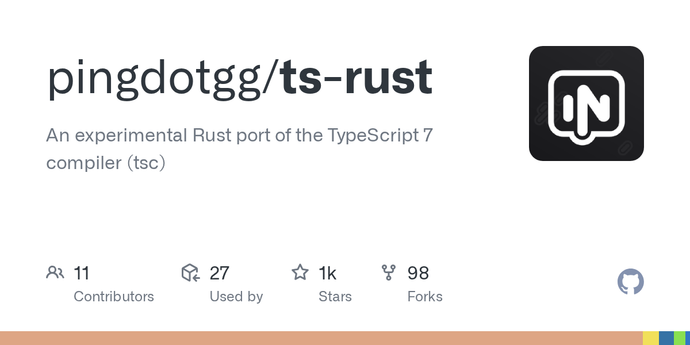
GitHub banner for the pingdotgg/ts-rust repository, describing it as an experimental Rust port of the TypeScript 7 compiler.

ts-rust ports the TypeScript 7 compiler, checker, and language server to Rust, aiming to match the Go implementation’s diagnostics and behavior. The repository reports extensive conformance and substantial speedups across several projects; in its published measurements, type checking across six open-source apps is 2.10× faster on average than TypeScript 7.

The trade-offs show up in the options: --fast cuts runtimes further but can increase CPU and memory use, while some diagnostic differences depend on checker count or type cycles. The project is explicitly experimental and documents limitations, including in build mode and during long editor sessions.

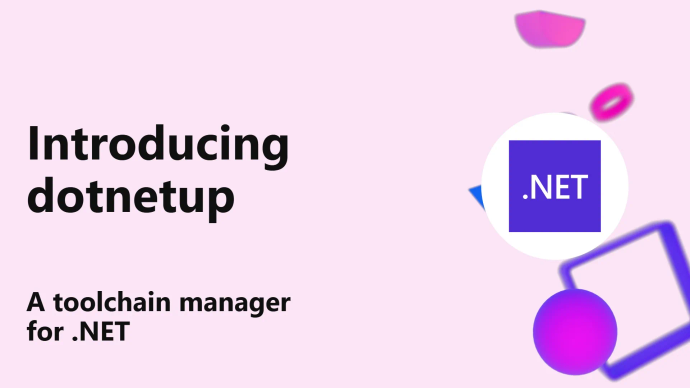
dotnetup toolchain manager presentation on the official .NET Blog

Microsoft introduces dotnetup, a toolchain manager for .NET inspired by rustup and nvm, designed to simplify installing, updating, and managing multiple SDK and runtime versions without admin rights. The tool operates entirely in the user’s home directory, respects global.json, lets you track version channels or install daily builds, and streamlines cleanup of obsolete versions. It targets CI/CD use cases and aims for a unified experience across macOS, Linux, and soon Windows.

Chet Husk

Void Cloudflare Blog illustration — deploying full-stack Vite apps with Void

Cloudflare introduces Void, an open-source platform combining an SDK, CLI, and hosting environment to deploy full-stack Vite applications on Cloudflare. This unified workflow manages server routes, databases, authentication, and Cloudflare provisioning without manual setup, with a CLI that automates deployment and resource management. The approach aims to speed up prototyping and internal app creation while maintaining access control and security, and integrates with major modern JavaScript frameworks.

Christoph Nakazawa and Michael Dong