Sébastien Rigaux

Tech watch

← All links

AI Agents

Page 2 of 3

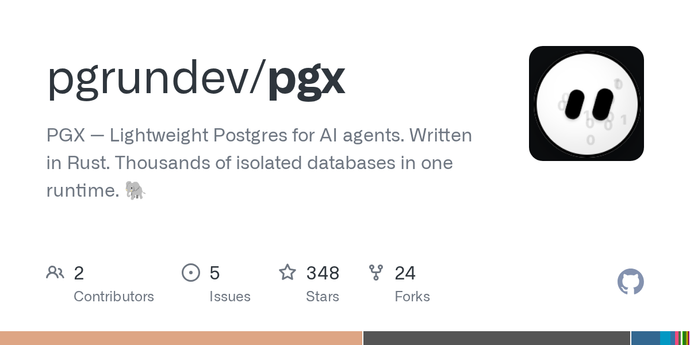
GitHub preview of the pgrundev/pgx repository, described as lightweight PostgreSQL for AI agents, written in Rust.

PGX runs isolated PostgreSQL databases inside a single Rust runtime, targeting short-lived agent, CI, and test environments. On-demand creation from a sealed template and copy-on-write on ZFS reduce the cost of branching; without block cloning, the system makes a full copy.

The project is at v0.1.0 and targets disposable databases, not production data: fsync is disabled, and one runtime is a single failure domain. Its benchmarks document their measurements and conditions; the PostgreSQL regression suite reports zero result differences in the stated configuration, without claiming general compatibility.

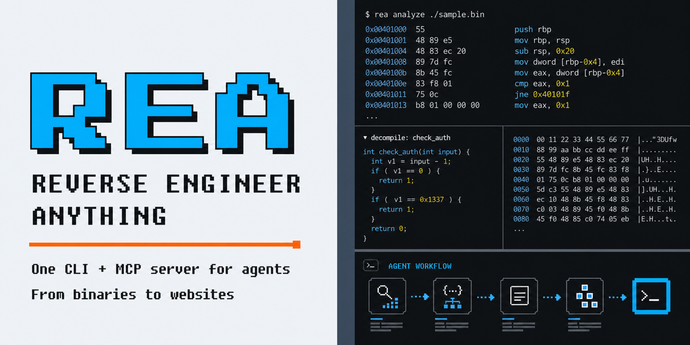
Screenshot of the REA repository on GitHub

REA offers a unified approach to reverse engineering, driven by agents that can analyze native binaries, JavaScript/Electron apps, websites, or databases without source code access. The tool integrates with agents like Claude Code or Cursor, provides evidence and limitations for each analysis, and leverages native tools (Hopper, Ghidra, IDA) for deep inspection. The documentation details supported scenarios, provider setup, and CLI workflows, with concrete examples of feature-level reverse engineering from real applications.

morluto

Tool

Engram: persistent memory for MCP-compatible AI agents

engram.gentlemanprogramming.comPermalink

Engram provides persistent memory for AI agents, compatible with any agent supporting the MCP protocol (Claude Code, Gemini CLI, Codex, VS Code, etc.). The tool runs as a single Go binary with no external dependencies, storing memories in a SQLite file with built-in FTS5 search. It features a TUI, Git sync, and a self-hostable cloud extension, while remaining local-first and open source under the MIT license.

Gentleman-Programming

Repository

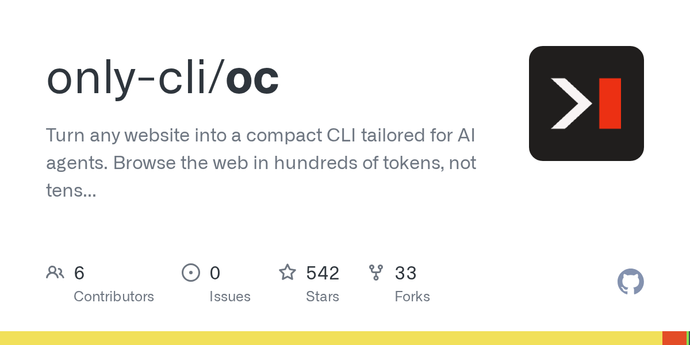
A compact web-browsing CLI for AI agents

github.comPermalink
A compact web-browsing CLI for AI agents

A compact CLI turns websites into commands tailored for AI agents, returning the useful information without loading tens of thousands of tokens. The repository documents its commands and supported sites, making it a practical way to reduce the cost of automated browsing.

only-cli