Sébastien Rigaux

Tech watch

← All links

Agent skills

Reusable instructions and resources that give agents focused capabilities.

Taste Skill banner on a beige background, with the project name on the left and stacked interface mockups on the right.

Taste Skill gives coding agents a system for building less generic company websites: palettes, hero layouts, UI fragments and real photographs, with art direction tailored to the type of business. The repository offers Claude Code and Codex integrations, plus installation through npx skills.

Its distinctive feature is automated checking in headless Chrome: pages render at four widths, from 390 to 1440 px, and are checked for empty visuals, contrast, alignment and images missing on slow networks. WebGL and scroll effects are limited to tech, gaming and software pages, with static fallbacks for phones and reduced motion.

Leonxlnx

Banner for the cloudflare/security-audit-skill GitHub repository, showing its coding-agent skill description and contributor, issue, star, and fork counts.

This skill turns a coding agent into a security auditor by orchestrating a six-phase repository audit, from reconnaissance to report generation. Findings are structured as machine-readable data and independently verified.

A separate agent tries to disprove each candidate; results distinguish confirmed findings, leads needing validation, and rejected candidates. Running target code requires an OS-enforced sandbox with external networking disabled and resource limits in place.

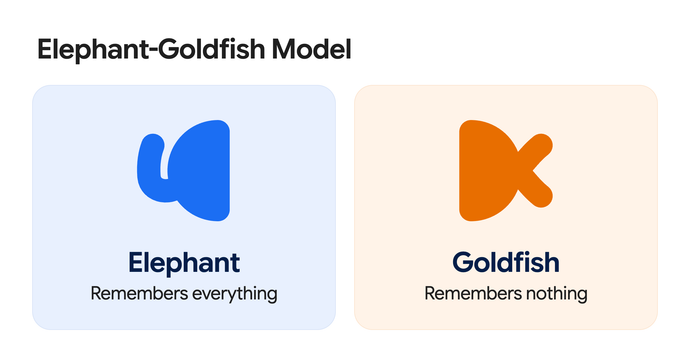
Elephant-Goldfish Model graphic: two panels show a blue elephant that remembers everything and an orange goldfish that remembers nothing.

Elephant-Goldfish Model, Google’s open-source plugin, provides skills to explore an idea, draft a specification, and challenge it before implementation. An “Elephant” agent keeps the project context; “Goldfish” reviewers inspect the document without the conversation history to surface unstated assumptions and risks.

The repository also covers resolving review findings and comparing documentation with code. Reviews require fresh subagent contexts; if the environment cannot create them, EGM stops that step.

Image for the GoogleChrome/modern-web-guidance repository, showing the Chrome logo and contributor, issue, star, and fork counts.

Modern Web Guidance gives coding agents expert guidance on browser APIs, CSS, performance, and accessibility, steering them toward native solutions instead of legacy patterns. The repository brings together 232 features and 186 use cases as skills installable in multiple agents.

Its CLI searches locally for a guide and adds it to the agent’s context. The guidance incorporates Baseline compatibility data, targeted fallbacks, and automated evaluation; the project is marked as a preview release.

Found via Frontend Focus

Black graphic with the text “Ship less JavaScript in Next.js with your AI agent” and the Next.js logo.

Next.js 16.4 includes an AI agent skill that analyzes Turbopack’s module and chunk graph to find imports that add to shipped JavaScript. It can, for example, spot when a static import elsewhere in the bundle prevents a component from staying deferred, then suggest changes for review before applying them.

The analyzer also compares snapshots and filters code loaded on the initial render. Vercel reports nearly two megabytes of compressed JavaScript saved across v0 and vercel.com; the fixes were checked on preview deployments. The tool requires Turbopack, the default bundler since Next.js 16.

Will Binns-SmithFound via This week in React

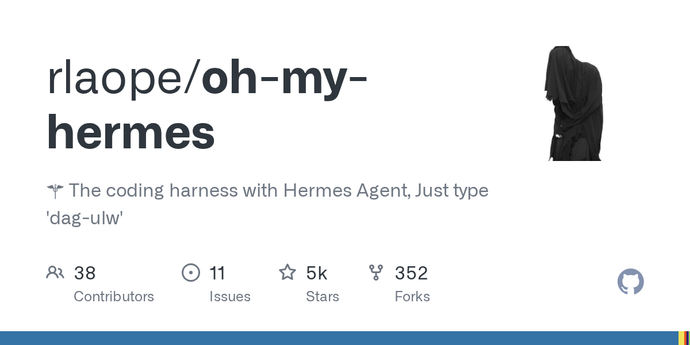
GitHub preview card for the rlaope/oh-my-hermes repository, showing the project name, tagline, and counts for contributors, issues, stars, and forks.

oh-my-hermes adds an orchestration layer to Hermes Agent: it maps work categories to models and reasoning effort, loads skills on demand, and can turn a goal into a graph of parallel tasks. Each task keeps a separate write scope, while a distinct node verifies the outcome.

A notable architectural choice is separating preparation from execution evidence: a plan is not treated as completed work, and an agent’s claim that it finished does not validate the result. The project also offers review-gated memory and a dedicated TUI, without replacing or patching Hermes Agent.

rlaope

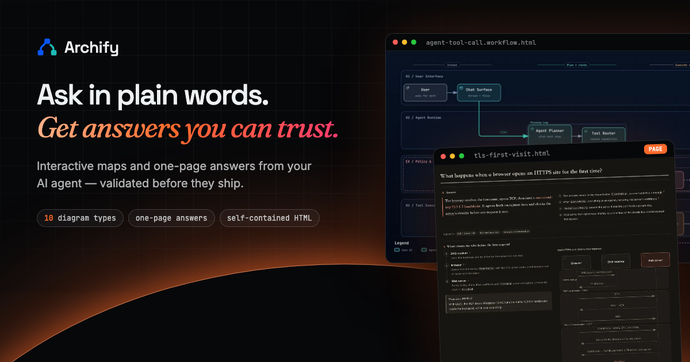
Archify visual showing an interactive map and an answer page in browser windows.

Archify is an open-source Agent Skill that helps an AI agent turn a description, question, or repository evidence into an interactive diagram or a concise page with a clear conclusion and sources. It supports ten diagram types, from architecture maps to timelines, and outputs a self-contained HTML file with no runtime dependencies.

Maps can be explored and refined in plain language, without learning a diagram editor. For one-page answers, sources can be pinned to a specific commit; the result can also be exported as a long image or PDF. The skill works with Claude Code, Codex, Cursor, OpenCode, and GitHub Copilot.

Repository cover image for Claude SEO, an SEO auditing tool for Claude Code.

Claude SEO turns Claude Code into an SEO auditing tool: specialist agents assess indexing, performance, content, structured data and visibility in AI search, then produce a prioritized action plan. Reports stay on the machine, but analyzed pages are sent to Claude, as with other Claude Code workflows.

The repository also emphasizes tooling reliability, with automated checks, support for Python 3.11 through 3.14, and safeguards against untrusted web content. Live-data extensions are optional; without Google API keys, Core Web Vitals results are lab estimates.

Agrici Daniel

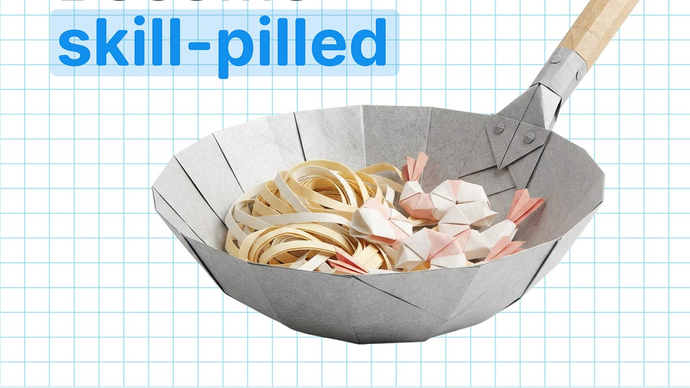
Illustration of a paper frying pan holding ribbons and origami shapes on a grid background, with the text “skill-pilled”.

PostHog shares practical guidance for writing skills that help agents without locking them into a brittle workflow. The core idea is to load context progressively, define the goal and constraints, then let the agent choose steps that fit the repository and runtime environment.

The article also addresses maintenance: separate durable structure from fast-changing details, point to a single source of truth, and regenerate skills instead of patching them indefinitely. Skills carry context and upkeep costs, so they make most sense for recurring tasks where agents lack essential context or perform poorly by default.

Ian VanagasFound via JavaScript Weekly