Sébastien Rigaux

Selected links

Tech watch

A personal selection of links, tools, and ideas I want to keep and share with my teams.

GitHub preview card for the reticlehq/reticle repository, showing its name, a description of runtime perception for AI agents, a black icon, and counts for contributors, users, discussions, stars, and forks.

Reticle helps coding agents check what they actually built rather than stopping at the code change. The repository presents a runtime-perception tool for web and desktop apps; reticle compare drives two builds in a browser and reports differences users can see, network calls, and console errors.

Verification happens from outside the app, with no SDK required. The comparator can pit a main build against a pull request preview and, with --base, classify differences as regressions, missed targets, or changes.

Divyanshu Shekhar

Fimo graphic reading “Your website, with superpowers” and “Get found in AI answers and search,” on a light background with colored circular shapes.

Fimo helps marketing teams maintain a website and improve its visibility in search engines and AI answers with specialized agents for SEO, GEO, content, performance, accessibility, and compliance. The platform also includes a visual editor, hosting, previews, and change history.

Agents run on a schedule or when the site changes. Small fixes can publish automatically; changes that need a decision arrive as proposals with previews for approval. The site stays connected to its existing framework without being rebuilt, while developers continue working in the code.

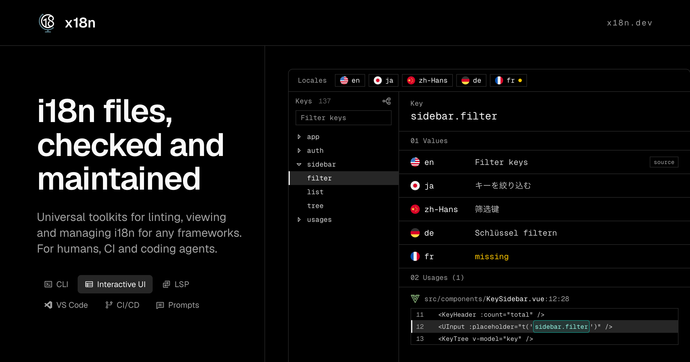
Screenshot of the x18n site in a dark theme: the left side shows “i18n files, checked and maintained,” while the right shows a translation interface with keys, values in several languages, and a missing French translation.

x18n finds missing, unused, or broken translation keys by cross-checking code calls against locale files. Its CLI can fail CI on errors, while search and rename commands connect translated values to their usages.

The CLI, VS Code extension, and browser UI share the same engine. Renaming can update locale files and code, with --dry-run available to inspect changes before writing; the UI also exposes MCP tools for coding agents.

GitHub repository banner showing its name, a profile photo, and counts for contributors, users, discussions, stars, and forks.

This ESLint plugin flags useEffect patterns that unnecessarily complicate React code, pairing each anti-pattern with a specific alternative and a link to the documentation. It covers derived state, chained state updates, and effects used as event handlers, among other cases.

Its analysis considers state, props, context, refs, and dependencies to assess when an effect runs. It offers recommended and strict configurations, and also works with Oxlint.

Nick van Dyke

Black graphic with a large gray skull in the background and the text “Skullet — Smart Skeleton States”.

Skullet automates loading states without hand-drawn placeholders: the npm package renders invisible sample data, measures the elements, then draws skeletons in their shape to avoid layout shift.

The demo shows several interfaces, from metrics to notifications, and also raises the question of server rendering.

@lochieaxon

Tool

react-resizable-panels: three patterns for resizable layouts

react-resizable-panels.vercel.appPermalink
Purple graphic with the words “react resizable panels” beside a symbol made of chevrons and a vertical bar.

The react-resizable-panels documentation introduces React components for building resizable interfaces: panels arranged in rows or columns, grids that resize in two dimensions, and workspaces with tab sets users can rearrange by dragging.

The workspace example shows how to provide an initial model with defaultModel and select tab content through renderTabContent. The package includes TypeScript definitions.

A white card on a pale blue background displays “Fixing a Hydration Mismatch Error and UI Flicker in React” and the label “Blog”.

In Next.js, a localStorage value can make server-rendered HTML differ from the first client render. The article compares the trade-offs: waiting until mount avoids the error but leaves the real content out of the SSR HTML; using the same initial value for both renders preserves that content, though a later update can cause flicker.

To synchronize a sidebar without that flash, an inline script applies its saved state to the DOM before hydration and passes it to React, which uses the same classes. The article also distinguishes an isolated theme control from a mobile backdrop handled with CSS.

Giorgi MoniavaFound via React Digest

White Decap logo on a purple-to-pink gradient background.

Decap CMS adds an editorial interface to static sites while keeping content in the Git repository. Teams can manage drafts, reviews, and publishing with version history and a live preview that supports non-technical contributors.

Its declarative setup lives in a config.yml file for defining collections, fields, and workflows, while custom widgets extend the editor. For teams needing centralized access or relief from Git API limits, Decap Turbo adds features including hosted authentication and a database proxy.

Taste Skill banner on a beige background, with the project name on the left and stacked interface mockups on the right.

Taste Skill gives coding agents a system for building less generic company websites: palettes, hero layouts, UI fragments and real photographs, with art direction tailored to the type of business. The repository offers Claude Code and Codex integrations, plus installation through npx skills.

Its distinctive feature is automated checking in headless Chrome: pages render at four widths, from 390 to 1440 px, and are checked for empty visuals, contrast, alignment and images missing on slow networks. WebGL and scroll effects are limited to tech, gaming and software pages, with static fallbacks for phones and reduced motion.

Leonxlnx

GitHub banner for the libracoder/kiri repository, showing its name, a short description of the container runtime, a man's portrait, and counts for contributors, issues, discussions, stars, and forks.

Kiri replaces Docker Desktop and OrbStack with a lightweight container runtime for macOS, Windows, and Linux, compatible with the Docker CLI, Compose, and buildx. The repository also describes a native UI and support for Kubernetes clusters and Linux machines.

Its architecture uses a Linux VM and a Rust agent that starts containers through clone3, without runc, a shim, or dockerd. The project publishes startup-time benchmarks against Docker Desktop and OrbStack, along with instructions for reproducing them.

Precious Okwu

NewReleases logo: “new” in blue and “(releases)” in black on a white background.

NewReleases tracks new project and package versions across platforms such as GitHub, npm, NuGet, and Docker Hub, then sends alerts by email, instant messaging, or webhook. It removes the need to check each dependency or tool manually.

Notifications can be instant or scheduled, and tracking can be configured from dependency files such as package.json, requirements.txt, or go.mod. Regular-expression and prerelease-status filters help narrow down which versions trigger alerts.

Janoš Guljaš

Papra GitHub banner showing the repository name, a light-green document icon on a black background, and contributor, usage, star, and fork counts.

Papra brings document storage and management together in an open-source archiving platform. Full-text search, advanced filters, tags, and automatic imports from email or a folder help organize files and retrieve them later.

The project can be deployed with Docker and also provides a CLI, API, SDKs, and webhooks for integration with other tools. Its online demo runs entirely in browser-local storage, with no backend.

Corentin Thomasset

GitHub preview of the pullboard-dev/pullboard repository, showing its name, a truncated description, and contributor, issue, star, and fork counts.

Pullboard coordinates development agents around approved specifications: each claims an item in its own worktree, passes a test gate, then another agent verifies the commit before it is accepted. Rules and activity stay in the repository, with a local board instead of a hosted service.

Its workflow puts concrete controls around agent work: approved requirements are frozen when an item is claimed, lanes restrict writable paths, and a state machine shared by the commands, interface, and documentation governs each transition.

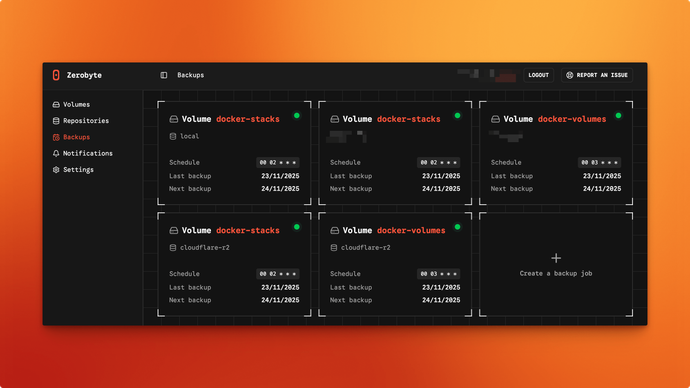
Screenshot of the Zerobyte interface showing scheduled backup jobs, their status, and destination repositories.

Zerobyte brings scheduling, management, and monitoring of encrypted Restic backups into a web interface. It supports NFS, SMB, WebDAV, and SFTP sources as well as local directories, with destinations including S3, GCS, Azure, and rclone.

The Docker Compose setup can be pared down when backing up only already-mounted directories: removing SYS_ADMIN and the FUSE device reduces the container’s granted capabilities, but prevents direct mounting of remote shares.

nicotsx

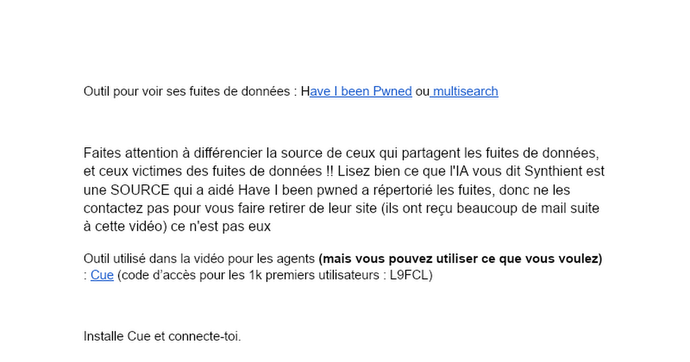
Screenshot of a document showing links to Have I Been Pwned and multisearch, plus a warning about data-breach sources.

A three-agent workflow aims to find exposed personal data, identify removal procedures, and draft GDPR requests. The document sets out each agent’s role and instructions, then explains how to have them collaborate in a Cue group chat.

The process keeps human approval before emails are sent and says never to share passwords. It also distinguishes sites that catalogue data breaches from the organizations responsible for them, helping avoid contacting the wrong party.

Banner for the cloudflare/security-audit-skill GitHub repository, showing its coding-agent skill description and contributor, issue, star, and fork counts.

This skill turns a coding agent into a security auditor by orchestrating a six-phase repository audit, from reconnaissance to report generation. Findings are structured as machine-readable data and independently verified.

A separate agent tries to disprove each candidate; results distinguish confirmed findings, leads needing validation, and rejected candidates. Running target code requires an OS-enforced sandbox with external networking disabled and resource limits in place.

A black-and-white dog runs after a green tennis ball on a field.

The four Fetch Metadata headers tell servers where a request came from and how its response will be used. Andrew Lock explains Sec-Fetch-Site, Sec-Fetch-Mode, Sec-Fetch-Dest, and Sec-Fetch-User to help distinguish, for example, a legitimate navigation from a suspicious cross-site request.

Examples contrast an image loaded from a CDN with a JavaScript fetch() call. Because JavaScript cannot modify these signals, servers can use them in a Resource Isolation Policy as an additional layer of defense against CSRF requests.

Andrew LockFound via C# Digest

A cube-shaped logo made of gray blocks, with an orange block in the center.

Finbuckle.MultiTenant provides ASP.NET Core with tenant resolution, per-tenant configuration, and data-isolation building blocks. A basic setup combines a host-based strategy, a configuration-backed store, and the UseMultiTenant() middleware.

The middleware must run before components that depend on the tenant, such as authentication and authorization. The library also includes integrations for per-tenant options, authentication, and Entity Framework Core data isolation.

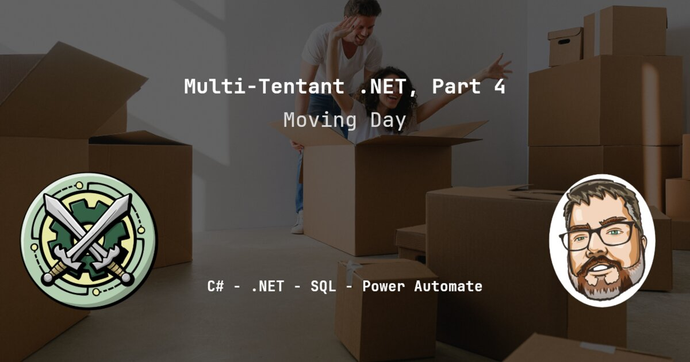
Banner reading “Multi-Tenant .NET, Part 4: Moving Day,” with moving boxes, a guild emblem, and an illustrated portrait.

This installment explains how to move a tenant from a shared database to a dedicated one without taking the application offline or disrupting other tenants. The catalog drives the switch, while the same EF Core model and query filter serve both isolation modes.

The migration uses an initial copy, a temporary read-only window, a delta copy, and verification before cutover. The runbook waits for the cache to expire before reopening writes, preventing instances that still hold the old connection from writing to the shared database after the switch.

BarretFound via C# Digest

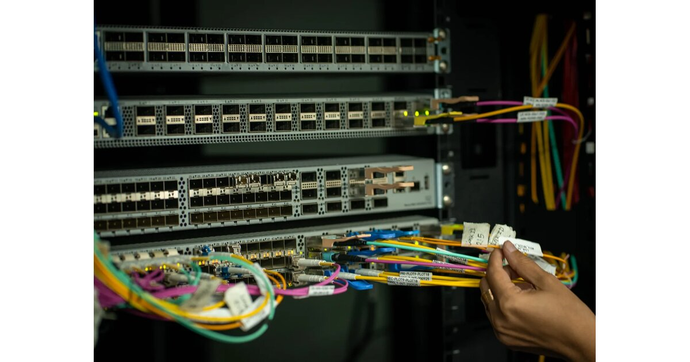
A hand handles colorful network cables in front of rack-mounted equipment.

With one database per tenant, EF Core no longer needs a global query filter, a TenantId column, or a tenant-specific model cache key: the tenant is selected through a connection string resolved from a catalog database.

This isolation simplifies the model but shifts complexity to operations: each migration must be applied to every database. The article also explains how IDesignTimeDbContextFactory lets dotnet ef create the context without an active request or tenant.

BarretFound via C# Digest